Residential Lighting Process
FOR INTERIOR DOMESTIC LIGHTING LAYOUTS
Survey & Evaluation – Proposals & Concept – Design & Detail – Automation & Controls
1. Modern Design Considerations
It takes many years for an apprentice to learn enough to design lighting properly.
Modern design practices in domestic buildings should consider the following points.
♦ Quality of the light beam colour content.
This includes Red content to enhance facial completion, and colour balance of furniture and features to enhance the perception in the space.
♦ Dim to warm
Reducing both intensity and colour of light while in a dimmed state, or to OFF
♦ Maintenance.
Replacement of the LED array as it diminishes over time to end of life.
♦ Human Centric Lighting.
To follow natural bio rhythms, changing colour via tuneable white from intense white to warmer colours in the evenings.

Daytime

Night time Changes
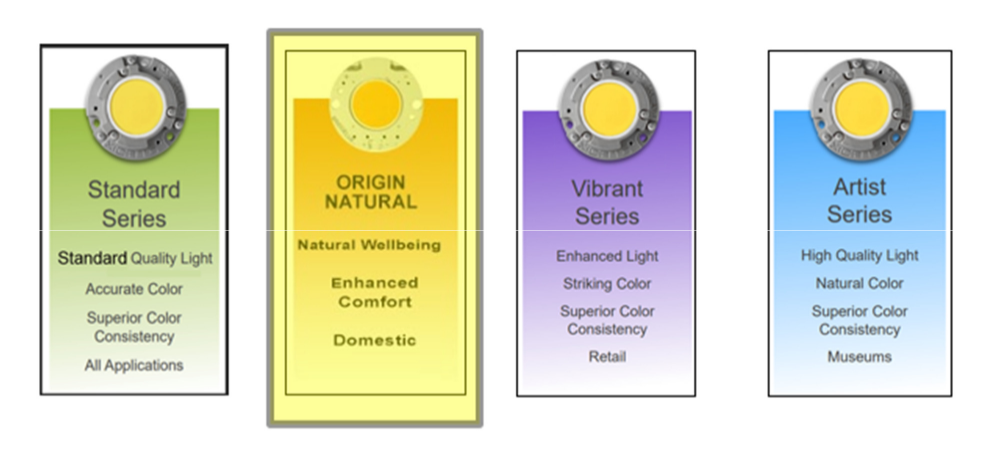
The Breadth in variations of LEDs have improved in recent years over the standard quality LED Lighting. This brings a means to manage transition between cloudy days, early dusk and late evening changes in lighting. But improvements also come with added technical complexity.
Comparisons
Designer Lead vs Contractor Lead
Designers
- Create a model of the space.
- Measure parameters like.
- Light falling on walls.
- Measure visual comfort.
- Measure the impact of general and other comfort lighting as a whole.
- Places lighting suitable for specific tasks or features.
Contractors
- Limited to no ability for the measurement of light.
- Have limited to no means to assess the combined effects of all lighting installed.
- Are not able to evaluate aspects for visual Comfort.
- Generally light a room at floor or table height.
1* Neurology- Human Centric Lighting : considerations K.W Houser (Oregon state) & T Esposito Lighting Research Cambs (MA)
2. The Incorporation of Well Being
Poor lighting can have a detrimental effect on general health and well being from research in this field *1
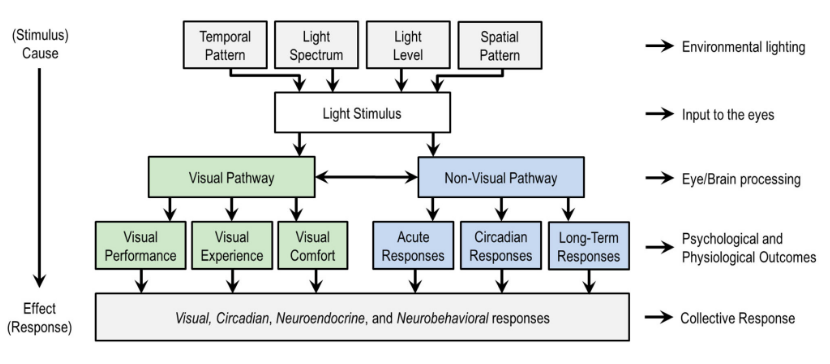
Below is an overview of the relationship between visual effects and non visual body functions that contribute to well being.
To incorporate benefits in well being from lighting design practice, the following key principals should be adopted in the design stage:
- The design should achieve a suitable performance level . It shall comply with recommended practice for light levels defined by CIBSE trade body.
- Adress the light quality (e.g. low glare, flicker omission and good colour rendering).
- Balance daylight exposure and artificial Light exposure.
- Consider Colour tuning Dim to warm and Tuneable White in Aesthetics
- Adopt Well guidelines and
- Provide Light to Promote visual performance
Considerations
Indirect light stimulates the lower retina triggering higher levels of non visual response.
Light on the Vertical surface stimulates the upper regions of the retina with higher visual responses
Lighting chosen therefore requires an elevated quality of LED over standard with a balance of indirect and direct lighting on surfaces
3. Typical Residential Installations
Taking a small typical room as an example
A Typical Design View
♦ Flat 2D plan
♦ Lights the Floor
♦ Square or Rectangle array for floor area lighting
♦ No ability to assess performance
♦ No ability to assess Glare, or Contrast
♦ Little appreciation of Photometric properties of lighting
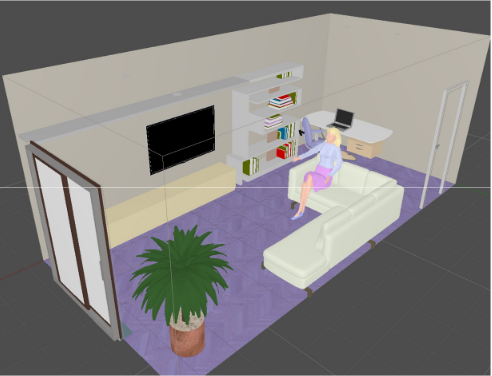
A Homeowner would generally be sold something like the image on the Right. But without the detail as to intensity shown here
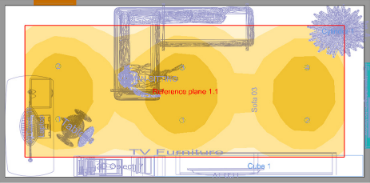
Considerations
These such designs generally light to the floor, but in a si?ng or standing position, the eye is observing the space at eye level and light spread on the walls .
Any placement of lighting should therefore consider direct light to walls, and the effect of these as reflective surfaces within the space. Differences in this approach are shown following:
2. Comparison in traditional and those with a design Element
A lighting designer can measure performance, also seeks to understand how someone is likely to use the space. Needs for switching Dimming and Controls, and has electrical knowledge
When to use a DESIGNER
For a strong VISUAL APPEARANCE. For VISUAL COMFORT and for Multi USE OPEN SPACES
The DESIGNER will encourage an appearance from a 3D view point at head height.
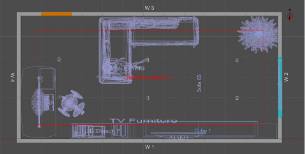
From a 2D to a 3D Environment

To THIS..! With contractor typical lighting shown
Now in a 3D view, it is easy to see that the eye is attracted to the VERTICAL WALL surfaces, NOT THE FLOOR
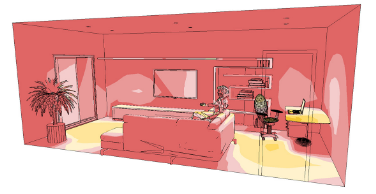
Only NOW is it clear that the wall surfaces and ceilings are intrinsically
dark, and that the room is likely to appear a bit dingy.
But reasons may not be clear.
DESIGNERS
A designer will use His / Her experience to maximise for visual comfort, contrast and appeal
When to use a DESIGNER
♦ Where visual comfort is important.
♦ To control hash glare using appropriate products
♦ To create interest in architectural features and artwork
♦ To allow for changes in use, e.g. from comfort to a cleaning level, where the use needs dimming control
♦ To control hash glare using appropriate products
♦ To divide circuits based on the needs of the user
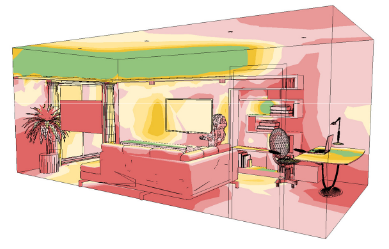
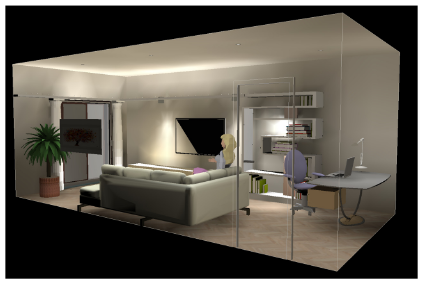
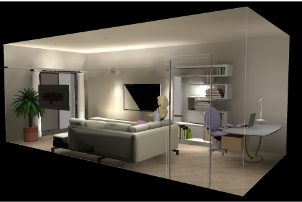
A CGI rendered image of the room in a comfort environment
DESIGNERS
Controls are used to minimise vast arrays of wall switches, to simplify the use of lighting
to provide easy pre-set or combination of switch arrangements to meet the needs of
the user
When to use CONTROLS
♦ Where the space is multi-use, Dining and TV and…
♦ To group circuits in large spaces
♦ To create interest in architectural features using automated switch cycles
♦ For Lighting and Blind Control
♦ To combine Lighting and Heating.
♦ To control Lighting and Sound
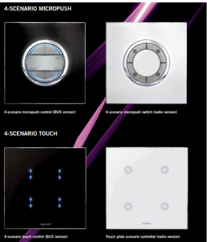
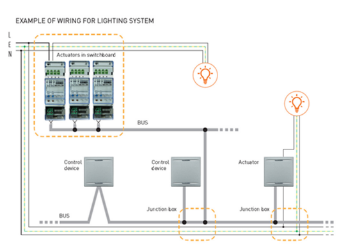
Depending on scale and type, switches now carry thin Low Voltage data. This data is picked up in fuse units to switch all manner of devices
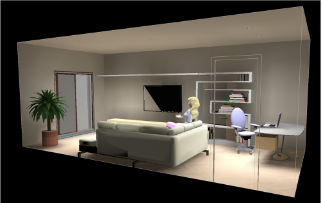
From BLAND….
To INTERESTING.!